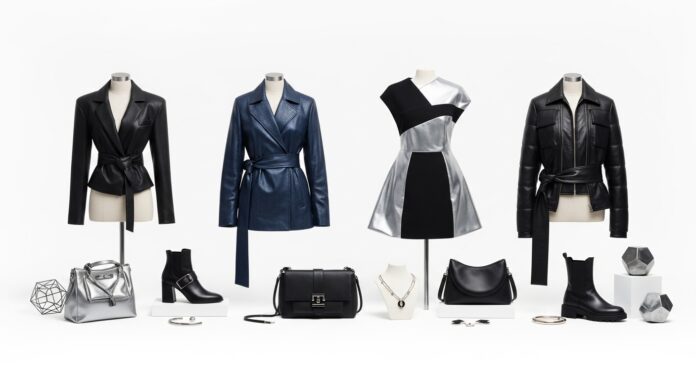
It was a cool fall afternoon, and as Emma scrolled through her Instagram feed, she noticed something different. The usual flow of timeless, classic outfits had given way to bolder, more daring looks — oversized blazers paired with bike shorts, chunky sneakers under flowy dresses, bucket hats making an unexpected comeback. Fashion felt like it was moving faster than ever, with new combinations surfacing every week. The excitement of staying ahead of the curve was real, but it raised an obvious question: what’s actually driving these trends, and how do you keep up without chasing every single one?
This guide looks at the trends genuinely shaping fashion right now — not a list to memorize, but a sense of the forces behind what’s currently showing up on runways, in street style, and across social feeds.
Why Fashion Feels Like It’s Moving Faster Than Ever
Trends have always cycled, but the pace has clearly picked up. Social media plays a large part in that — a runway look that used to take a season to filter down to everyday wardrobes can now show up in fast-fashion stores within weeks of a major show. Consumers can watch a trend happen in close to real time, from red carpet or runway to street style to their own closet, in a way that simply wasn’t possible a decade or two ago.
That speed changes how trends work. Instead of a handful of dominant looks per year, fashion now moves through a rolling series of overlapping micro-trends, some lasting months and others barely a season. Staying current doesn’t really mean adopting everything — it means understanding which shifts have staying power and which are likely to pass quickly.
Oversized Blazers: The Power Look, Reworked
One of the more durable trends of the past couple of years has been the return of the oversized blazer — a clear nod to 1980s power dressing, but softened and made more versatile for how people actually dress now. Its appeal is largely in how adaptable it is: a structured blazer worn oversized pairs just as easily with tailored trousers for work as it does with denim or bike shorts for a more sport-chic, off-duty look.
Part of what’s kept this trend going rather than fading after a season is that it solves a real styling problem — it adds structure and polish to an otherwise casual outfit without requiring anything else to change. That’s a more durable kind of trend than one built purely around novelty.
Chunky Sneakers: Comfort Wins Out
Sneakers moved from gym gear to genuine fashion statement years ago, and the chunky, sometimes deliberately clunky silhouette — occasionally nicknamed “dad shoes” — has become one of the more entrenched versions of that shift. High-end labels have leaned into the look rather than resisting it, which has helped push it from a niche statement into a mainstream staple.
The trend reflects something bigger than footwear alone: a broader, sustained preference for comfort even in fashion-forward pieces. Chunky sneakers paired with a flowing dress or a sleek athleisure outfit have become a reliable way to balance something polished with something genuinely comfortable to wear all day — which is likely why the trend has had more staying power than a lot of footwear fads.
Sustainable Fashion: Style With a Conscience
Sustainability has moved from a niche concern to a mainstream expectation across a meaningful share of the fashion industry. Fast fashion’s environmental footprint has pushed more shoppers toward ethical and eco-conscious alternatives, and brands like Patagonia, Reformation, and Stella McCartney have built real reputations around proving that sustainable and stylish aren’t mutually exclusive.
The practical shift shows up in recycled materials, more transparent supply chains, and a general move toward timeless design over disposable trend pieces — the underlying message being buy less, buy better, rather than replacing a wardrobe every season. That’s less a single trend than a values shift that’s now shaping how a lot of other trends get designed and marketed.
Y2K Fashion: Nostalgia, Reimagined
Y2K style — low-rise jeans, baby tees, mini skirts, butterfly clips — has had one of the more dramatic revivals of recent years, driven largely by a generation that didn’t live through the original era the first time and is discovering it fresh through platforms like TikTok. Nostalgia is clearly part of the draw, but so is the playful, unpolished energy of the era, which stands in contrast to the more minimalist aesthetics that dominated the years right before its return.
Brands have generally updated the era’s signature pieces rather than reproducing them exactly — modern fabrics, updated fits — which has helped the trend feel current instead of like a straightforward costume revival.
Gender-Neutral Fashion: Breaking Old Boundaries
Fashion built around traditional gender categories has continued to loosen, with pieces like wide-leg trousers, boxy shirts, and oversized outerwear increasingly worn and marketed without being tied to menswear or womenswear specifically. More brands have launched collections built around versatility and inclusivity from the ground up, rather than simply relabeling existing lines.
High-profile figures embracing fluid, boundary-crossing personal style have helped normalize the trend for a much broader audience, but the shift is also happening at a more structural level — retailers rethinking how collections are organized in the first place, not just what’s on the rack.
Tech-Infused Fashion: Where Style Meets Innovation
Fashion and technology have been converging steadily, and that shows up in a few concrete ways: fabrics designed to regulate temperature or respond to conditions, and shopping experiences that increasingly include virtual or augmented-reality try-on tools rather than relying purely on guesswork or return shipping.
This is still a smaller, more experimental corner of the industry compared to something like sustainability or Y2K’s revival, but it’s a genuinely growing one — and it’s likely to keep expanding as the underlying technology becomes cheaper and more reliable to build into everyday clothing rather than one-off runway pieces.
Bold, Statement Colors
Fashion has leaned hard into bold, expressive color in recent seasons — electric blues, neon greens, vibrant oranges showing up across both runway collections and everyday street style. It’s a fairly direct rejection of the more muted, minimalist palettes that dominated a few years prior, and it tends to function as a low-commitment way to participate in a trend without changing an entire wardrobe — a single bold piece can shift an otherwise simple outfit considerably.
Color trends like this tend to move in cycles rather than a straight line, and they’re worth treating as seasonal rather than permanent — a great way to refresh a look without a long-term commitment to a specific shade.
The Role Social Media Plays in All of This
Instagram and TikTok in particular have become something close to fashion runways in their own right, where both professional influencers and everyday users showcase how they’re interpreting current trends. That visibility has genuinely sped up how quickly a look moves from niche to mainstream, and fast-fashion brands have gotten fast enough at production that runway-inspired pieces can reach stores within weeks of a major show, rather than months.
Trend-specific hashtags function as a constantly updated, informal catalog — a way to see thousands of interpretations of the same basic idea in one place, which makes it far easier to figure out how a trend might actually work for your own wardrobe rather than guessing from a single runway photo.
How to Actually Use Trend Information
Following fashion trends doesn’t have to mean chasing every one of them. A more useful approach is picking the trends that genuinely fit your existing style and wardrobe, and treating the rest as background information rather than a shopping list.
A few ways to do that in practice: buy into a trend through one accessible piece — a bold sneaker, an accent color, a single trend-driven accessory — rather than a full outfit overhaul. Look for versions of a trend that work with pieces you already own, rather than treating every trend as a reason to start from scratch. And pay attention to which trends keep resurfacing across multiple seasons rather than disappearing after one — those tend to be worth a slightly bigger investment than something that’s clearly a short-lived moment.
Common Mistakes When Chasing Trends
A few patterns tend to backfire when it comes to keeping up with fashion trends.
Buying a trend at its peak. By the time a trend is genuinely everywhere — flooding every retailer’s front page and every influencer’s feed — it’s often close to fading. Buying in early, or waiting until a trend has proven itself across more than one season, tends to be a smarter use of a clothing budget than buying at the exact moment of peak visibility.
Going all-in on a single trend. A full outfit built entirely around one micro-trend — head-to-toe Y2K, for instance — reads as more costume than personal style, and it tends to date faster than a single trend-driven piece mixed into an otherwise timeless outfit. One or two trend pieces, worn against a foundation of basics, usually looks more considered than an outfit chasing every current trend at once.
Ignoring personal fit for the sake of the trend. Not every trend suits every body, wardrobe, or lifestyle, and that’s fine. A trend that looks great on a runway or in a curated feed doesn’t automatically translate to daily life — it’s worth adapting a trend’s underlying idea (a color, a silhouette, a texture) rather than copying the exact styling if the original version doesn’t actually work for you.
Building a Wardrobe That Can Absorb New Trends
The easiest way to stay current without constant, expensive reinvention is to build a wardrobe around solid basics — well-fitting trousers, a few reliable neutral pieces, quality outerwear — and then treat trend pieces as the smaller, more disposable layer on top. That foundation does most of the heavy lifting, while trend pieces get to be more experimental precisely because they’re not carrying the whole outfit on their own.
This also makes it easier to let a trend go once it’s run its course. A statement piece bought as a clear, contained addition to an existing wardrobe is easy to retire when the moment passes; a wardrobe built entirely around one trend has to be replaced wholesale once that trend fades, which is a far more expensive and wasteful way to stay stylish.
Final Thoughts
Fashion trends move quickly, and it’s easy to feel like keeping up requires constant reinvention. In practice, the trends with real staying power — oversized tailoring, comfort-first footwear, sustainable production, gender-fluid silhouettes — tend to solve an actual styling problem rather than existing purely for novelty, which is exactly why they’ve lasted longer than a single season. Pay attention to those underlying patterns rather than every individual micro-trend, and staying current becomes a lot less exhausting than it looks from the outside.

