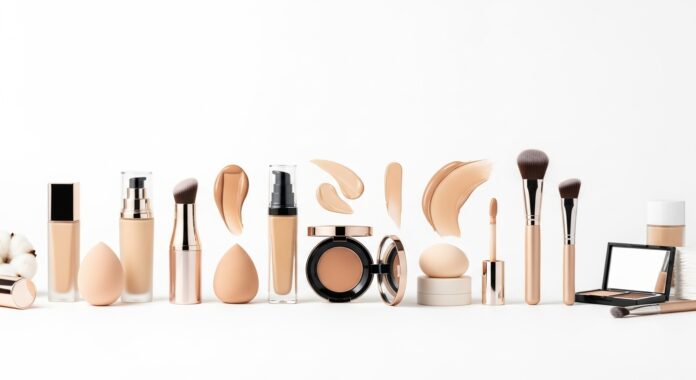
Picture stepping into a beauty store, scanning shelf after shelf of foundation bottles lined up like a colourful parade. Somewhere in that sea of options is the bottle that’s been sitting in your makeup bag for years — the one that used to feel like the perfect answer. Lately, though, as your skin and your routine have both changed, you’ve started wondering whether it still is.
That moment of reconsidering is more common than it seems, and it says something real: finding the right foundation isn’t a one-time decision. Skin changes with seasons, age, and habits, and the formula that worked two years ago doesn’t automatically still fit. This guide walks through the different types of foundation, how to match one to your actual skin, and how to apply it so it looks like skin rather than a layer sitting on top of it.
Why Getting Foundation Right Matters
Foundation is one of the few products that touches your entire face, which means it has an outsized effect on how the rest of your makeup looks. The wrong formula fights against your skin all day — separating, oxidising to the wrong tone, emphasising texture it was supposed to smooth over. The right one does the opposite: it disappears into your skin rather than sitting visibly on it.
Getting there is less about finding “the best foundation” in some universal sense and more about matching formula, finish, and shade to your specific skin. A foundation that’s excellent for oily skin can look chalky and heavy on dry skin, and vice versa — there’s no single product that works equally well for everyone.
Types of Foundation and What They’re Good For
Liquid foundation is the most versatile option and works reasonably well across most skin types. Coverage is buildable — sheer with a light hand, fuller with layering — which makes it a practical default if you’re not sure where to start. It blends easily with fingers, a sponge, or a brush, giving more control than most other formats.
Powder foundation suits oily skin particularly well. It controls shine, sets with a matte finish, and tends to feel lighter on the skin than liquid or cream options. It’s a strong choice for humid climates or anyone who deals with midday shine, though it can emphasise dry patches if your skin runs dry.
Cream foundation has a richer texture and genuinely fuller coverage, which makes it a good fit for dry or mature skin. The dewier finish adds a hydrated look that powder can’t replicate, though it needs more careful blending to avoid looking heavy.
Stick foundation is built for convenience — easy to carry, easy to apply precisely, and useful for quick touch-ups without needing a mirror and a full kit. Coverage is buildable and the texture tends to be creamy, similar to cream foundation in a more portable format.
BB and CC creams blur the line between skincare and makeup. BB creams (beauty balm) offer lighter coverage along with skincare benefits like hydration and often sun protection, while CC creams (colour correction) focus more specifically on evening out redness and discoloration. Neither replaces a full-coverage foundation, but both work well for a lower-maintenance everyday look.
How to Choose the Right Foundation for Your Skin
Start with your skin type. Oily skin generally does better with oil-free or mattifying formulas — powder or a matte liquid foundation. Dry skin benefits from hydrating, creamier formulas that won’t cling to dry patches. Combination skin often does best with a lightweight liquid that can be set with powder only where needed, rather than all over.
Identify your undertone before your shade. Undertone — cool, warm, or neutral — matters more than most people realise, and it’s a separate question from how light or deep your skin is. A common way to check: look at the veins on your inner wrist. Blue or purple usually points to a cool undertone, green to warm, and a mix of both to neutral. Getting the undertone right narrows the shade range considerably before you even start swatching.
Test on the jawline, not your hand. This is close to universal advice across makeup artists and skincare professionals, for a simple reason: the skin on your hand rarely matches your face, but your jawline sits right where face meets neck, making it the most reliable place to judge a match. Apply two or three candidate shades there, rather than testing one in isolation.
Check the match in natural light. Store lighting — often warm, artificial, and unflattering — can make a shade look right when it isn’t. Step near a window or outside if you can before deciding.
Give it a few minutes before deciding. Some foundations oxidise slightly after application, shifting a shade or two darker or warmer as they interact with your skin’s natural oils. A shade that looks perfect straight out of the bottle can look different ten minutes later — worth checking before you commit to a full bottle.
Decide on coverage before formula. Sheer coverage lets more of your natural skin show through and suits a low-maintenance, “your skin but better” look. Full coverage evens out redness, scarring, or pigmentation more completely, at the cost of looking less like bare skin if overdone. Most liquid and cream foundations can be built up in layers, which gives you flexibility without needing two separate products.
A Few Reliable Options Worth Knowing
Estée Lauder Double Wear Stay-in-Place Makeup has built its reputation on genuine longevity — it’s one of the most consistently reached-for options for anyone who needs makeup to survive a full day without touch-ups, and it offers substantial, buildable coverage.
Fenty Beauty Pro Filt’r Soft Matte Longwear Foundation is widely known for its extensive shade range, one of the first mainstream lines to genuinely commit to covering a broad spectrum of skin tones. It leans matte but stays lightweight rather than heavy or cakey.
NARS Radiant Cream Compact Foundation suits dry or mature skin especially well, with a creamy, hydrating texture and a natural, radiant rather than flat finish. Its compact format also makes it easy to carry for touch-ups.
These aren’t the only good options on the market by any means, but they’re a reasonable starting point if you’re not sure where to begin — one from each general category (long-wear, wide shade range, radiant/hydrating).
Tips for Applying Foundation Well
Prep your skin first. Foundation applies better and lasts longer over clean, moisturised skin. A primer isn’t mandatory, but it can help on days when you need extra longevity or want to blur texture and pores before foundation goes on.
Choose your tool deliberately. A damp makeup sponge tends to give the most natural, skin-like finish, since it absorbs excess product rather than pushing it all onto the skin. A brush gives more precise, buildable control, particularly useful for concealing specific areas. Fingers work fine too, and warm the product slightly for easier blending — the “best” tool is really whichever gives you the finish you’re after.
Blend into the neck, not just the jaw. Stopping foundation abruptly at the jawline is one of the most common causes of a visible foundation line. Blend a little down into the neck and up toward the hairline so the transition disappears.
Work in thin layers. It’s much easier to build up coverage gradually than to correct an application that’s too heavy from the start. Start light, assess, and add only where you actually need more.
Set with powder where needed. If you have oily skin, or simply want your foundation to last longer through a full day, a light dusting of setting powder — particularly through the T-zone — helps lock everything in place without disturbing the rest of the makeup.
Finish Matters as Much as Formula
Beyond liquid, powder, cream, and stick, foundations also differ by finish, and this often matters more day-to-day than the format itself.
Matte finishes absorb light rather than reflect it, which controls shine and suits oilier skin well. The trade-off is that matte formulas can sit unevenly on textured or very dry skin, drawing attention to fine lines and flaky patches rather than smoothing over them.
Dewy finishes reflect light and read as fresh, hydrated, and youthful — a good match for dry or normal skin. On very oily skin, though, a dewy finish can slide and look shinier than intended by midday, particularly without a setting product to help it hold.
Satin finishes sit between the two, offering some luminosity without full-on shine. For a lot of skin types and occasions, satin is the safer middle ground if you’re unsure which direction to go.
It’s worth choosing finish independently of coverage level — a foundation can be full coverage and still dewy, or sheer and still matte. The two decisions aren’t linked, even though marketing sometimes implies otherwise.
Adjusting Your Shade Through the Year
Skin tone isn’t fixed, and a shade that matched perfectly in winter can look noticeably light by the height of summer if you spend any real time in the sun. Rather than replacing an entire bottle each season, a few practical options handle the gap:
Keep a slightly deeper shade specifically for summer months, and mix the two together during the transitional weeks when your natural tone sits between them. A few drops of a bronzing or tinted drop added to your regular foundation can also shift the tone temporarily without committing to a second full bottle.
It’s worth rechecking your match at least twice a year — once in the depths of winter and once in peak summer — rather than assuming a single “correct” shade holds steady year-round. This is one of the more overlooked reasons foundation ends up looking mismatched even when it was a perfect match at the time of purchase.
Common Mistakes to Avoid
Matching shade to your hand instead of your face. As covered above, this is one of the most frequent reasons foundation ends up visibly mismatched.
Ignoring undertone in favour of depth alone. Two foundations can be the same depth but completely different undertones, and only one will actually disappear into your skin.
Sticking with a shade or formula out of habit. Skin tone shifts with the seasons — sun exposure lightens or darkens it — and skin type can shift with age, climate, or hormonal changes. A foundation that matched perfectly a year or two ago is worth reassessing rather than assuming it’s still correct.
Skipping the wait-and-check step for oxidation. Committing to a shade before giving it a few minutes to settle is a common reason people end up with a bottle that looked right in-store and wrong by lunchtime.
Applying too much at once. Heavy application is one of the fastest ways to make foundation look like a mask rather than skin. Building thin layers almost always looks more natural than one thick one.
Final Thoughts
Finding your foundation isn’t about picking a product off a shelf and hoping for the best — it’s about understanding your skin type, your undertone, and how a formula actually behaves once it’s on your face rather than in the bottle. Test on your jawline, check in natural light, give it time to settle, and choose a formula that matches how your skin actually behaves day to day. Get that combination right, and foundation stops being something you’re wearing and starts looking like your own skin, just a little more even.

