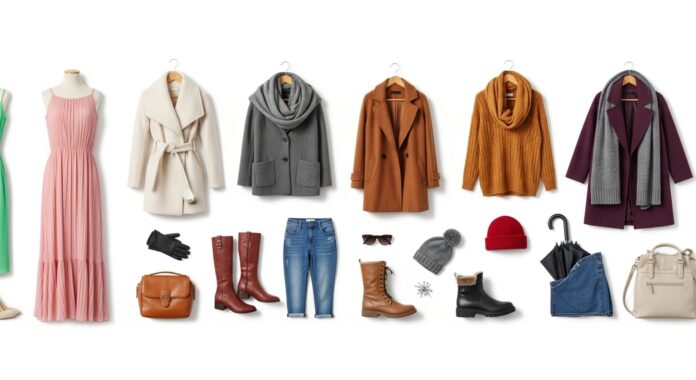
It’s the first crisp day of autumn, and you step outside into the cool air and the golden light that’s replaced summer’s glare. Without really deciding to, you start thinking about retiring the light fabrics and bright prints for something warmer — a good sweater, boots, richer tones. That instinct repeats itself four times a year, and it’s a big part of why fashion never really sits still. Each season brings its own set of practical needs and its own aesthetic, and understanding both makes it easier to dress well without constantly starting from scratch.
This guide walks through what actually changes season to season — not just the color palette, but the fabrics, silhouettes, and priorities that shift as the weather does — plus how to build a wardrobe that carries you through the year without needing a full overhaul every few months.
Why Seasonal Dressing Actually Matters
Fashion has always moved in step with the calendar, and that’s not just a marketing convenience — clothes genuinely need to do different jobs depending on the weather. Winter fashion leans toward warmth and coverage; summer prioritizes breathability and movement. The industry built around seasonal collections exists because the underlying need is real, even if the specific trends attached to it change year to year.
The global fashion industry is a genuinely massive one — commonly estimated in the range of $1.7 to $2 trillion depending on the year and the research firm doing the counting — and seasonal shopping cycles are a meaningful part of that, as people refresh their wardrobes at the start of each new season for reasons that are as practical as they are style-driven.
Cultural and environmental factors shape seasonal trends just as much as pure aesthetics. A particularly hot summer pushes lighter fabrics further into the mainstream; a cold winter reinforces demand for genuinely insulating pieces rather than ones that just look warm. Paying attention to seasonal trends isn’t only about staying current — it’s also a reasonably practical way to make sure your wardrobe actually suits the weather you’re dressing for.
Spring: Fresh Colors and Lighter Layers
Spring reads as renewal in fashion the same way it does everywhere else — after a season of dark, muted winter tones, the shift toward lighter colors and fabrics feels deliberate rather than incidental. Soft pastels, blush tones, and nature-inspired prints — florals especially — tend to dominate spring collections, picking up right where winter’s neutrals left off.
Key spring pieces tend to be transitional by design: flowy dresses, lightweight trench coats, and knitwear that’s warm enough for a cool morning but not so heavy it becomes a problem by afternoon. That transitional quality is really the defining feature of spring dressing — temperatures swing enough within a single day that layering pieces you can add or remove matter more than in almost any other season. A light jacket over a midi dress, for instance, handles both a chilly morning commute and a warmer afternoon without requiring an outfit change in between.
Summer: Bright Colors and Breathable Fabrics
Summer fashion is built around fabric first and color second. Linen, cotton, and other breathable materials become the priority once temperatures climb, and flowy silhouettes that allow airflow tend to outperform anything fitted or structured. Bold prints — tropical motifs, geometric patterns — show up consistently in summer collections, and bright colors like orange, coral, and turquoise become far more common than they are the rest of the year.
Accessories carry more of the outfit’s personality in summer than in colder seasons, partly because the clothing itself tends to be simpler. Sunglasses, hats, and sandals aren’t just functional — they’re often where the actual style statement happens, especially when the rest of the outfit is a plain linen shirt or a simple sundress.
Resort and beachwear have also become a bigger part of the general summer wardrobe rather than a category reserved for actual vacations — stylish cover-ups, kaftans, and oversized hats now move fairly easily from the beach to a casual evening out, which has made them more versatile purchases than they used to be.
Fall: Earthy Tones and the Return of Layering
Fall sits in the same transitional territory as spring, just heading the opposite direction — temperatures cooling but not yet cold enough for full winter gear. Earthy tones dominate: rust, burgundy, olive, mustard, all echoing the season’s actual changing leaves. Layering becomes the primary technique for handling a day that might start cold and warm up considerably by afternoon.
Oversized sweaters and trench coats are reliable fall staples, and pieces like plaid and leather jackets tend to make a reliable comeback every autumn — not new discoveries so much as familiar friends returning on schedule. Footwear shifts noticeably too, with boots in various heights — ankle to knee-high — becoming the default choice as sandals get put away for the year. Scarves, hats, and textured handbags round out the season, adding both warmth and visual texture to outfits that are otherwise built around a fairly narrow, earthy color palette.
Winter: Cozy Chic and Luxe Fabrics
Winter is where fashion leans hardest into function, and the best winter pieces manage to do that without sacrificing how they look. Wool, cashmere, and velvet dominate winter collections, and layering isn’t optional the way it sometimes is in fall — chunky knit sweaters, long wool coats, and thermal layers form the actual backbone of a winter wardrobe rather than an optional add-on.
Neutral tones — black, gray, navy, camel — tend to be the default, but winter is also where jewel tones get their moment: emerald, sapphire, ruby, usually showing up in a coat, a scarf, or another statement piece rather than across an entire outfit. Faux fur and puffer jackets have become reliable winter outerwear options that manage warmth and style at once, which wasn’t always a given with heavier winter coats.
Accessories do real functional work in winter more than any other season — chunky scarves, gloves, and beanies aren’t purely decorative, and layering them is often what makes a winter outfit look intentional rather than just bundled up. Boots continue to matter here too, though the emphasis shifts toward insulated, waterproof options rather than the more purely stylistic boots that dominate fall.
How Social Media Changed the Pace of Seasonal Trends
Social platforms have sped up how quickly seasonal trends spread and how visible they’ve become. Instagram, TikTok, and Pinterest all function as a kind of real-time lookbook, and it’s become genuinely easy to see exactly how someone styled a transitional spring outfit or a chunky winter layering combination, rather than waiting for a magazine’s seasonal issue.
Seasonal hashtags act as an informal, constantly updated catalog of what’s trending at any given moment, and fashion brands have leaned into that visibility heavily — working with influencers specifically to showcase seasonal collections as they launch, rather than relying purely on traditional advertising. That shift has made seasonal fashion feel less like a handful of major moments per year and more like a continuous, evolving conversation.
Sustainability Is Reshaping How Seasons Get Approached
A growing share of shoppers are factoring sustainability into how they think about seasonal fashion, which is changing the category in a few real ways. Fast fashion’s environmental footprint has pushed more consumers toward brands that are transparent about materials and production, even for seasonal or trend-driven pieces.
One of the more useful shifts here is toward versatility — sustainable-minded brands increasingly design pieces meant to carry across multiple seasons rather than being tied to one narrow trend window, which cuts down on how often a wardrobe needs replacing in the first place. Secondhand and resale shopping has grown alongside this, giving people a way to stay current with seasonal trends without buying everything new — a well-chosen secondhand coat or boots do the same job as a new pair, often at a fraction of the environmental and financial cost.
Building a Wardrobe That Handles Every Season Without Starting Over
The easiest way to avoid a full wardrobe overhaul every few months is to build around transitional pieces that work across more than one season. A midweight jacket, for instance, can cover cool spring mornings and early fall evenings without needing a separate piece for each. Neutral bottoms — jeans, tailored trousers — tend to carry through every season, with the actual seasonal change happening in what’s layered on top rather than a full outfit swap.
It also helps to think of accessories as the seasonal layer that changes fastest and cheapest. A core wardrobe of well-made basics, refreshed each season with different scarves, jewelry, or outerwear, tends to be more sustainable — both for a budget and for the planet — than fully replacing a wardrobe every few months chasing whatever’s currently trending.
Common Mistakes When Shopping Seasonally
A few patterns show up repeatedly in seasonal wardrobes that don’t quite work as well as they could.
Buying too far ahead of the weather. Grabbing a full winter coat during an early-season sale sounds smart, but if it sits unworn for two months before temperatures actually drop, it’s tying up budget and closet space for longer than necessary. It’s often better to buy key seasonal pieces closer to when you’ll actually need them, even if that means missing the earliest sale window.
Treating each season as a full restart. A wardrobe doesn’t need to be rebuilt from scratch four times a year. Most core pieces — jeans, neutral knitwear, a good pair of boots — carry across multiple seasons with only accessories or outerwear changing. Approaching each new season as “what do I add” rather than “what do I replace” keeps both spending and clutter in check.
Ignoring the transitional weeks. The few weeks at the start and end of each season are often the hardest to dress for, and they’re also where a lot of wardrobe gaps show up. Keeping a handful of genuinely adaptable pieces — a midweight jacket, a scarf that works with multiple coats — solves more of the year than people expect from just a few items.
Shopping Smart at the Season’s Turn
The transition points between seasons are usually the best time to actually shop, for a couple of practical reasons. Retailers tend to discount outgoing-season stock right as the new season’s collections arrive, which means genuine bargains on pieces that still have a full season of wear left in them — summer sandals discounted in early fall, for instance, are still perfectly wearable the following spring.
It also helps to shop with the next season in mind, not just the one currently ending. A neutral, well-made coat bought at the end of winter, when prices tend to drop, will still be exactly as useful the following fall. Thinking a season ahead, rather than only reacting to the weather currently outside, tends to lead to smarter purchases and fewer moments of realizing a wardrobe gap right when you need the piece most urgently.
Final Thoughts
Staying stylish across the full year isn’t really about chasing every trend the moment it appears — it’s about understanding what each season actually asks of your wardrobe and building around that. Spring calls for lightness and flexibility, summer for breathability, fall for layering and earthy tones, winter for warmth without sacrificing style. Pay attention to those underlying needs, invest in pieces that carry across more than one season, and the wardrobe mostly takes care of itself — no matter what the calendar says today.

